Getting things fresh for you…
Getting things fresh for you…

Free Delivery
Minimum order ₹999

24/7 Support
Contact us 24 Hours

Secure Pay
100% Secure Payment

Easy Returns
Within 30 Days
Priya Naik
2026-03-16
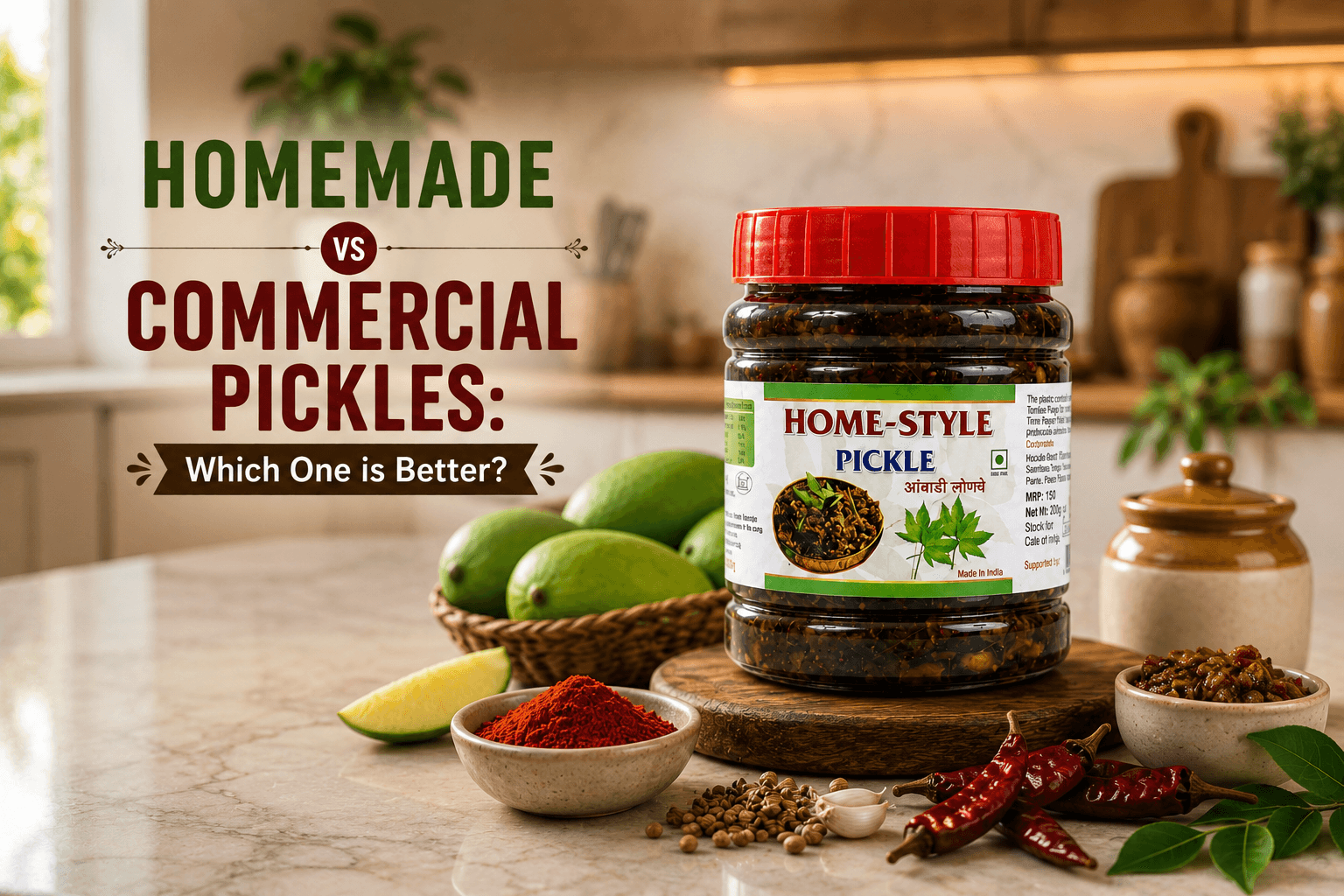
Pickles have been an essential part of Indian cuisine for generations. Whether paired with a simple dal-rice meal, parathas, or festive thalis, a spoonful of pickle can instantly elevate the dining experience. While modern supermarkets offer countless varieties of packaged pickles, many people still believe that traditional homemade pickles have a charm that simply cannot be replicated. But what exactly makes them different? Let's explore the key differences between homemade and commercial pickles.
In Indian households, pickle making is more than just a cooking process—it's a family tradition. Seasonal fruits and vegetables like mangoes, lemons, gooseberries, and chillies are carefully selected, mixed with aromatic spices, and preserved using age-old techniques. Many Maharashtrian and Konkan families still prepare pickles using recipes passed down through generations.
Traditional homemade pickles are usually prepared using fresh, locally sourced ingredients. The spices are often ground fresh, and natural oils are used to preserve the pickle. There is greater control over the quality of raw materials, resulting in a richer and more authentic flavor.
Commercial pickles are produced on a larger scale. While many reputed brands maintain high-quality standards, mass production often requires standardized processes to ensure consistency across batches.
One of the biggest reasons people prefer homemade pickles is their unique taste. The slow curing process allows the spices and ingredients to blend naturally over time, creating complex flavors that develop with age. Every household recipe has its own distinct character, making homemade pickles truly special.
Traditional pickle making often involves:
Indian pickles have traditionally relied on natural preservation methods such as:
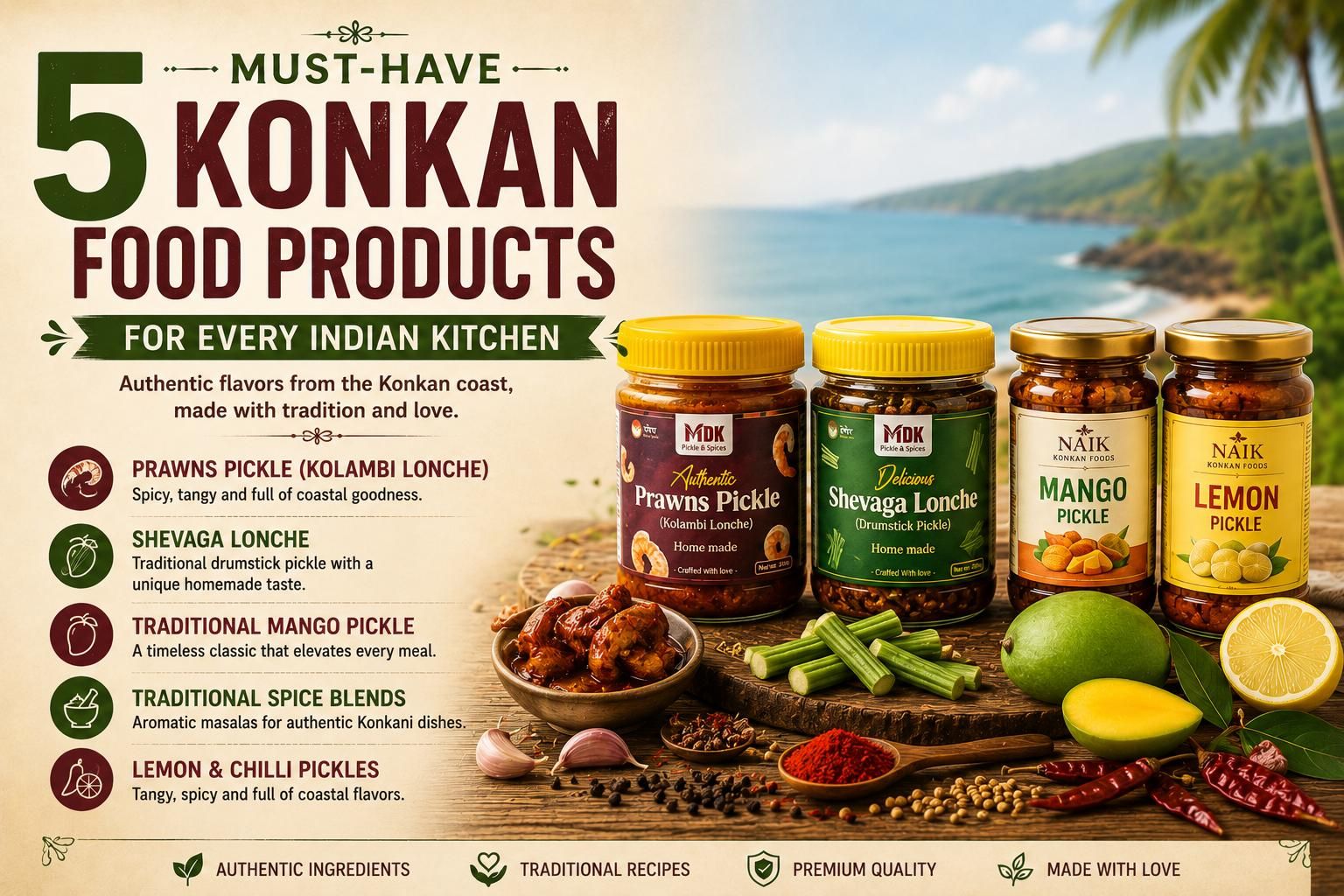
India's diverse food culture has given rise to countless regional pickle varieties. Some popular Maharashtrian and Konkan pickles include:
A timeless favorite prepared with raw mangoes and traditional spices.
Tangy, mildly spicy, and often enjoyed with everyday meals.
Perfect for those who enjoy bold and spicy flavors.
A delightful combination of seasonal vegetables and aromatic masalas. Each region brings its own unique blend of spices and preparation techniques.
Traditional pickles offer more than just taste—they carry memories, culture, and family traditions. The careful preparation and use of authentic recipes create a product that feels homemade, even when enjoyed years later. Many modern food brands now strive to preserve these traditional methods while maintaining quality and hygiene standards.
When buying pickles, consider the following:
To maintain freshness and flavor:
Whether homemade or commercially prepared using traditional recipes, Indian pickles remain an irreplaceable part of our culinary heritage. Their bold flavors, rich aromas, and ability to transform even the simplest meal make them a staple in kitchens across the country. Choosing pickles made with quality ingredients and authentic methods ensures that every bite delivers the true taste of tradition.